 Tvoi Agent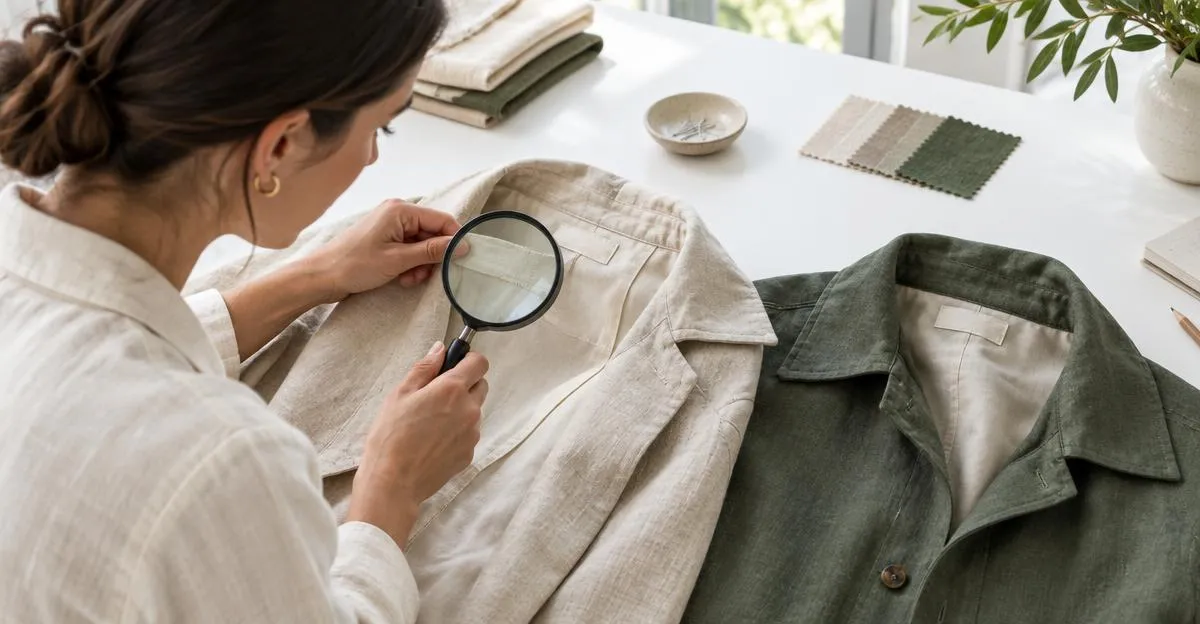
Buyers who hear about Prato for the first time often ask the same question: is the clothing sold there really made in Italy, or is it imported stock with an Italian address? The honest answer is that both exist. Prato's wholesale showrooms sell Italian-made pieces side by side with imported ones, and the district's reputation often mixes up three separate things: country of manufacture, price segment and quality. This guide explains the production tiers in Prato, what the Made in Italy label means under the law, how to check composition, origin and workmanship, and how quality control protects your order.
What buyers really want to know about Prato
When buyers ask whether Prato clothing is real Made in Italy, they usually want to know three things: where the item was made, what its quality is, and whether the quality matches the price. Prato's low-price segment has a reputation of its own, but a reputation is not a useful criterion. The background of a company or its owners says nothing about the quality of a garment: Prato has careful producers with good fabrics and weak suppliers too, in every price segment. Quality depends on fabric, construction, sewing and control, while the country of origin depends on where the garment was made and on the supplier's documents. So instead of clichés, we suggest clear criteria: production tier, actual country of manufacture, composition and finishing. That way you compare specific styles, not the reputation of a district.
Three production tiers in Prato
The first tier is the pronto moda wholesale showrooms. They release new styles every week, sell in size packs and keep prices accessible. The range is often mixed: some styles are sewn in Italy, some are imported, so the country of manufacture has to be checked for each item. The second tier is garment and knitwear factories that work to order and for clients' labels. Lead times are longer and minimums higher, but you get samples, an agreed fabric and control at every stage. The third tier is textile mills and spinners: fabrics, yarn and knitted fabric. Prato has long been strong in wool and regenerated fibres. A buyer needs to know which tier they are buying from, because it determines price, lead time and what you can ask of the supplier.
What Made in Italy means under the law
Made in Italy states the country of origin; it is not a quality mark. Under EU customs rules, the country of origin of clothing is as a rule the country where the garment was manufactured, meaning cut and sewn, and the origin of the fabric alone does not change that. The exact rule depends on the product code, so doubtful cases are checked with a customs broker. Within the EU, stating origin on clothing is usually not mandatory, but if it is stated, it must be true. In Italy, false or misleading origin claims are prohibited by law, and stricter conditions apply to the wording "100% Made in Italy". We cover these rules in more detail in our separate guide to the Made in Italy label.
How to read the composition label
In the EU the fibre composition must be stated: Regulation 1007/2011 requires official fibre names and their percentages. The label helps you compare styles, but it is worth checking too. See whether the stated composition matches the feel of the fabric: viscose, cotton, polyester and wool behave differently to the touch and when creased. If wool or cashmere is listed, confirm the percentage and ask the supplier to back it up. Look at the label language and care symbols: your market may need its own labelling. A finished product for the EU market without a composition label is already a reason to ask questions. When we buy over video, we show the label in close-up for every style and record the composition in the order.
How to check origin and workmanship
Origin is checked with a question and a document, not only with the label. Ask where the style is sewn, in the supplier's own workshop or by a subcontractor, and which country will appear on the invoice. For production to order, the best check is a visit to the workshop, in person or by video call. Workmanship shows in the details: straight stitching with no skipped stitches, finished edges, symmetry, pattern matching at the seams, reliable trims and zips. Compare the garment's measurements with the size chart: on low-priced styles the gap between sizes can be noticeable. If possible, take a sample or a few pieces before the main order. A price well below the market with no clear explanation usually means cheaper fabric or simplified finishing, and it is better to find that out before paying.
How quality control protects the buyer
A pre-shipment check is needed in every segment, from low-priced pronto moda to factory production. We inspect the goods before dispatch: we match styles, colours and quantities against the order, check seams and finishing, take sample measurements and verify the composition and country-of-origin labels. For every inspection you receive a photo and video report. If we find defects, we negotiate with the supplier in Italian: replacement, rework or a discount. We never pass off goods made outside Italy as Italian: the marking must state the real country. This protects you not only from defects but also from customs delays and complaints from your customers. And you decide whether a given production tier suits you by seeing the goods and the reports, not by a label.
How to judge goods beyond the label
- Know where you are buying: showroom, garment factory or textile mill
- Confirm the country of manufacture for each style
- Check the composition label and the share of premium fibres
- Compare garment measurements with the size chart
- For production, visit the workshop in person or by video
- Never put Made in Italy on goods made in another country
- Plan a quality check before shipment
We show you how the goods are really made
We run a live shopping session across Prato showrooms and factories, show labels and seams in close-up, confirm the country of manufacture and inspect your order before shipment.